


Home » Asia Pacific Internet Information Center
Asia Pacific Internet Information Center
The intERLab targeted infrastructure organizations which, in turn, provided the Internet or pushed for further development on the Internet, either in terms of technology or social impacts. We were not an information center for the general public at large.
Under the umbrella of AP*Retreat, which was coordinated by intERLab, we worked in close collaboration with Internet resource organizations such as the Asia-Pacific Network Information Center (APNIC) and the Asia Pacific Top Level Domain Association (APTLD). AP*Retreat served as a meeting point for leading Internet organizations for the purpose of information exchanges, updates, and collaborations.
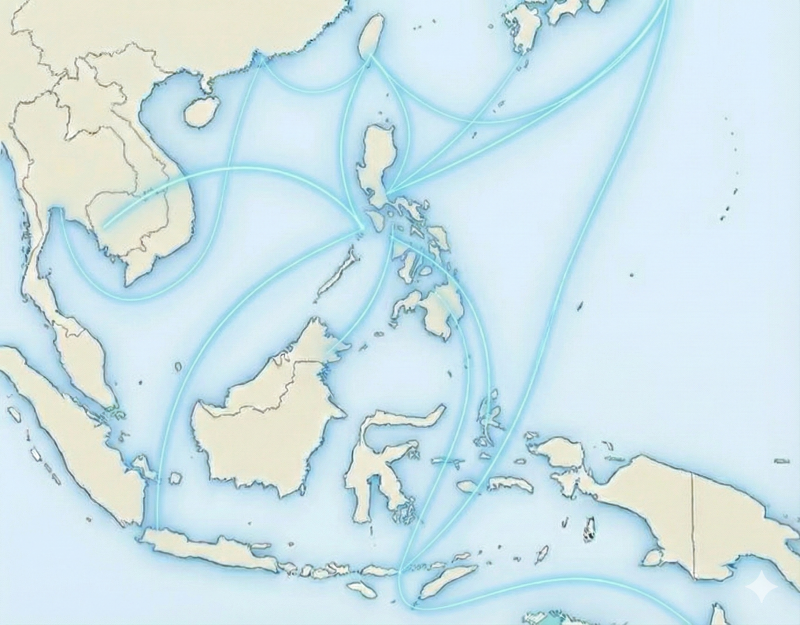
Global and Regional Engagement
Beyond its secretariat roles, intERLab maintained a continuous presence in the global and regional technical community. We regularly participated in Internet Engineering Task Force (IETF) meetings, where the Director of intERLab served as a Co-chair of the GAIA (Global Access to the Internet for All) Working Group. In this capacity, intERLab contributed to the facilitation of discussions regarding the technical challenges of providing universal Internet access alongside other global stakeholders.
Additionally, we consistently engaged in APRICOT (Asia Pacific Regional Internet Conference on Operational Technologies) meetings, which provided a forum for networking engineers to share operational knowledge and strengthen the region’s backbone infrastructure.
A Journey of Connectivity and Continuity (1998–2026)
The evolution of the center was defined by a series of strategic milestones that bridged foundational infrastructure with the next generation of Internet leadership:
-
- 1998–2024: intERLab served as the AP*Retreat Secretariat, anchoring high-level strategic dialogues for the region’s top-tier organizations.
-
- 2002: The inaugural Asia Pacific Next Generation (APNG) Camp was held at the Asian Institute of Technology (AIT) in Thailand, establishing a model for regional youth engagement.
-
- 2004: The Internet History Museum was established following pivotal discussions at the APNG Next Generation Camp in Australia.
-
- 2008: The 10th APNG Camp returned to AIT, Thailand, marking a decade of progress.
-
- 2025: intERLab hosted the 60th School on Internet (SOI) Asia Meeting, focusing on the continued development of regional research and education network infrastructure.
Throughout this era, APNG remained a leading voice in the region. Although it had spawned cornerstone organizations like APNIC and Asia Pacific Advanced Network (APAN), it maintained its steadfast commitment to youth development. The organization bonded and strengthened the relationship between senior pioneers and the next generation, ensuring that those with fresh technical perspectives were mentored by the leaders who had built the original foundations of the Asia-Pacific Internet.
Institutional Engagement with the SOI Asia Network
intERLab has a long history with this network, having hosted the 2nd AI3/SOI Asia meeting in 1996, followed by subsequent meetings in 1997, 1999, 2000, and 2002. Building on this foundational history, intERLab hosted the landmark 60th Meeting in 2025, marking nearly three decades of active technical and educational collaboration.
The Internet History Museum Project
With the assistance of APNG fellows, we developed the AP Internet History Museum Project, “ARPANET to Internet in Asia Pacific: Past, Present and Future.” This was intended to be the authoritative resource for the region’s history. Documenting the Internet while its pioneers were still able to recollect its origins was of vital importance.
The objectives for the project’s development included:
-
- Obtaining firsthand accounts of developments from all AP countries;
- Standardizing information in templates for individual pioneers;
- Integrating multimedia files with audio and video capabilities;
- Creating a social networking group for researchers and participants; and
- Nurturing partnerships with similar global history projects.
The museum was originally created from the archived papers and projects presented at the 2004 APNG camp, which were placed into an interactive database as the project’s foundation.
Events in Asia Pacific Region
Upcoming
-
- IETF 125, Shenzhen, China (March 14 –20, 2026)
Director of intERLab continues to co-chair the GAIA Working Group sessions during this event.
- IETF 125, Shenzhen, China (March 14 –20, 2026)
-
- APAN 62 , Auckland, New Zealand (August 10 –14, 2026)
The 62nd APAN will be hosted by REANNZ in Tāmaki Makaurau / Auckland.
- APAN 62 , Auckland, New Zealand (August 10 –14, 2026)
Recent
-
- 122nd Internet Engineering Task Force (IETF) meeting (March 15- 21, 2025)
Researchers from the Internet Education and Research Laboratory (intERLab) at the Asian Institute of Technology (AIT) made significant contributions
- 59th Asia-Pacific Advanced Network (March 3- 7, 2025)
Professor Kanchana Kanchanasut and Dr. Adisorn Lertsinsrubtavee of intERLab attended the meeting
- 122nd Internet Engineering Task Force (IETF) meeting (March 15- 21, 2025)